Forward Deployed Engineer (FDE): the engineer who builds AI on site, not at a desk.
 Serhat Altunoğlu
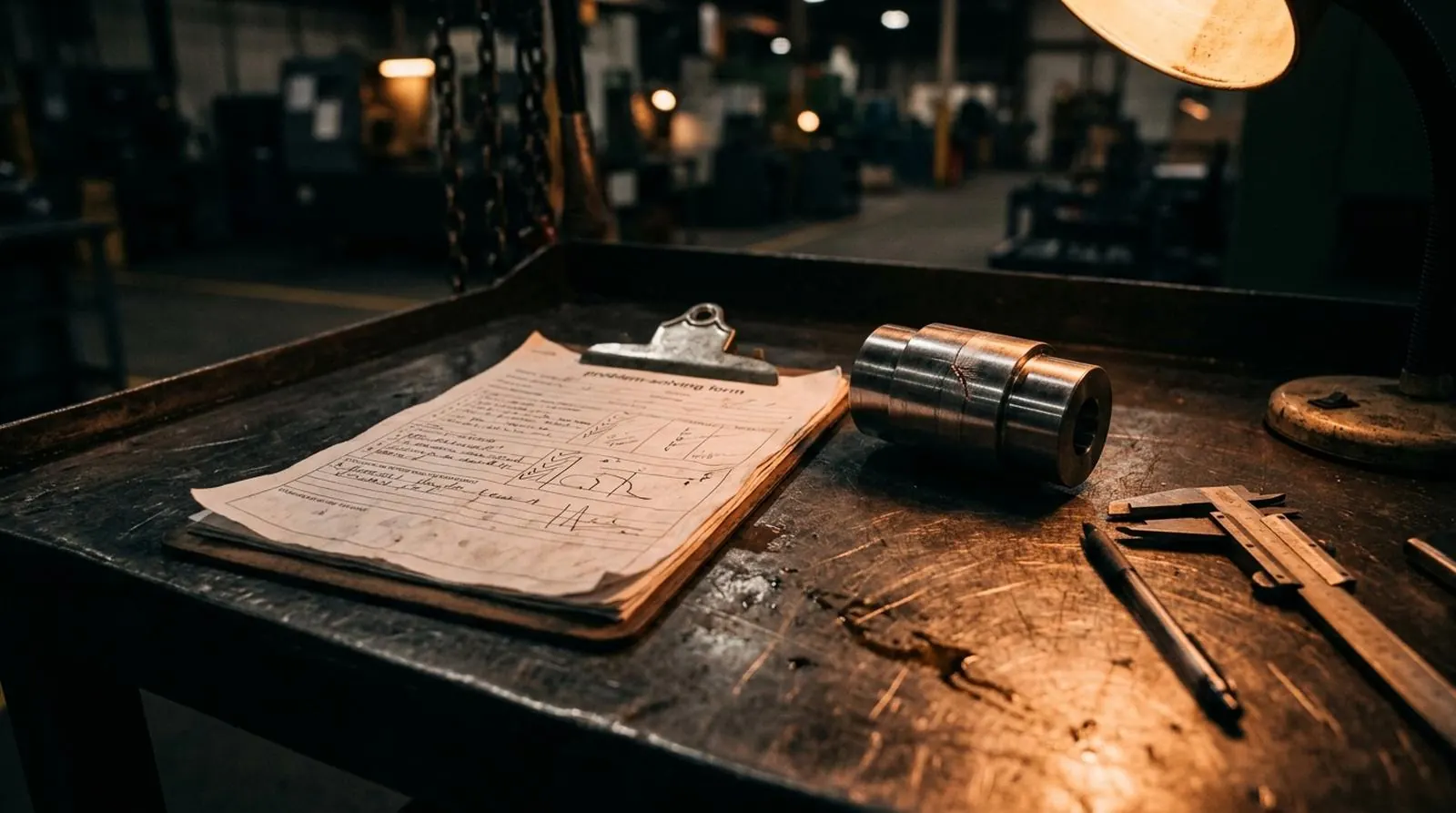
Most AI projects look great in a demo and stall in real work: the data is scattered, ERP access is limited, the approval chain is not written down, and the team does not trust the new tool. The FDE exists to close exactly that gap. This page explains what an FDE is, how it differs from a consultant or a software house, and how the model works with me.
What is an FDE?
What does Forward Deployed Engineer mean?
"Forward deployed" is a military term: a unit stationed in the field, not at headquarters. In engineering it means the same: not an engineer who designs at a desk and hands over, but one who goes into the customer's environment and builds the system there, with its data and constraints.
An FDE turns a business need into working software, does the deployment personally and keeps responsibility until the system is actually used.
What is a Forward Deployed AI Engineer?
An FDE working on AI projects. On top of the classic FDE work, they also own the decisions around large language models, retrieval-augmented generation (RAG) and AI agents:
- Which model and which environment for which task (business cloud, your own server, local model)
- Cost per request and a monthly budget limit
- An acceptance threshold for output accuracy, and regular measurement
- Security against prompt injection, excessive agency and data leakage
- Compliance and logging for GDPR, KVKK and the EU AI Act
What does an FDE do?
They move between four modes:
- Understand: see the work in place; find where the data lives, who approves what, and why each step is done.
- Build: build the solution inside that environment, not at a desk, together with the existing ERP, CRM, MES or email flow.
- Deploy: run the system in real work, first in shadow mode, then with human approval, and measure against the acceptance threshold.
- Support: monitor the system, catch drift, train the team and hand over to an internal owner.
How is an FDE different from a consultant, an agency or a software house?
- Consultant: says what should be done, and usually leaves the build to someone else.
- Agency: builds, but rarely goes on site; the work is split across several people.
- Software house: delivers a defined scope; changing your workflow is not its responsibility.
- FDE: understands, builds, deploys, measures the result and hands over. Responsibility stays with one person until the system is actually used.
Why does the FDE role matter now?
Because the hard part of AI is not the model, it is the last mile. Getting a model to work in a demo is easy; getting the same model to fit legacy systems, security rules, regulation and people's habits is hard. That is why pilots that work technically but that nobody uses keep multiplying. The FDE is the person who takes the pilot into real work.
The FDE model with me
Why should an SME or an independent expert work with an FDE?
You may have engineers and IT staff, but either they have no time or no experience building AI agents. Setting up a full-time FDE team is not realistic either. With an FDE for a defined period, the system gets built and your team learns alongside. The same applies to independent experts: you learn on your own work without handing it over.
How does the FDE model work with you?
Through six-step delivery: we narrow the problem, I see the work in place (a 1–2 day on-site review for companies), we measure the baseline, simplify the flow, build the agent in short steps and hand over. A pilot usually takes 4–8 weeks. Details are on the About page.
Why does manufacturing and field experience make a difference?
An FDE's most important skill is speaking the language of the people doing the work. I spent years on automotive and textile lines and on Hyundai and Ford programs working with OEE, 8D, APQP, PPAP and IATF 16949. I know why a quality engineer struggles with an 8D report and which data a shift supervisor trusts. Building the agent with that knowledge is what makes it usable.
Which technical stack do you use?
- Workflows: n8n, Make or Power Automate; open source and in your account where possible.
- Models: business-contract large language models or an in-house local model, depending on how sensitive the work is.
- Knowledge access: source-based answers over company documents (RAG), with document-level permissions.
- Integration: ERP (SAP, Logo, Canias, Mikro), MES and SCADA; read-only access to the plant network first.
- Agent protocols: MCP and A2A. This site's own MCP server and A2A agent card run live.
- Monitoring: a log of every step, cost and accuracy measurement, drift alerts.
What do you have at the end of the engagement?
- A process map and baseline measurement
- Agents and workflows running in your accounts
- A written acceptance threshold and measurement table
- A prompt library and usage rules
- A handover file and a trained internal owner
What should you look for in an FDE?
When choosing an FDE, look at these seven areas:
- Engineering depth: can they build the system themselves?
- Process knowledge: can they see waste and simplify the flow?
- Data and integration: can they connect safely to existing systems?
- AI decisions: model, cost and accuracy measurement
- Security and regulation: GDPR, KVKK, the EU AI Act
- Communication and training: can they win the team over and teach?
- Measurement: do they measure results rather than claim them?
I have been forward deployed for twenty years.
Line efficiency in multi-shift production at Assan Hanil, Toyota seat cover projects at TB Sewtech, supplier and quality processes on Hyundai and Ford vehicle programs. Today I build AI agents with the same habit of working on site. Details are on the About and Case studies pages.
In a short first call we can work out which work an AI agent could lighten, and how. I can sign an NDA before the call if you prefer.
Write to me